For many Chinese fans, tennis probably began with Li Na.
I still remember when I was in middle school and high school, Li Na first won the French Open in 2011 and then the Australian Open in 2014. Around that time, the idea that “a Chinese player can win a tennis Grand Slam” suddenly became real. Tennis, for the first time, truly entered the mainstream imagination for many casual viewers in China.

Then came the 2024 Paris Olympics, where Zheng Qinwen won the women’s singles gold medal. The Chinese tennis fever came back in full force, and I very naturally became one of the newly addicted tennis people swept up in the wave.
My friends and I often play tennis in Chicago. Around that time, we were genuinely a little obsessed. After watching the French Open final together at a friend’s place, we somehow still felt it wasn’t enough. So we made a very reasonable decision: drive to Cincinnati and watch a Masters tournament in person.
I did not take too many photos on the road, so let me first briefly introduce the Cincinnati Open.
The Cincinnati Open is one of the most important stops of the North American hard-court season. The men’s event is an ATP Masters 1000, and the women’s event is a WTA 1000, making it one of the highest-level tournaments outside the Grand Slams. It takes place every August, right before the US Open, so many top players use it as a key warm-up event before New York.
The tournament is held at the Lindner Family Tennis Center in Mason, Ohio, which is actually a bit outside downtown Cincinnati. In other words, this is not exactly a “walk around the city and casually catch a match” kind of event. It feels more like a real tennis pilgrimage site.
We left Chicago at 9 a.m., drove for about five hours, and arrived at the tennis park around 4 p.m.—tennis park, not scam compound—to watch some matches!
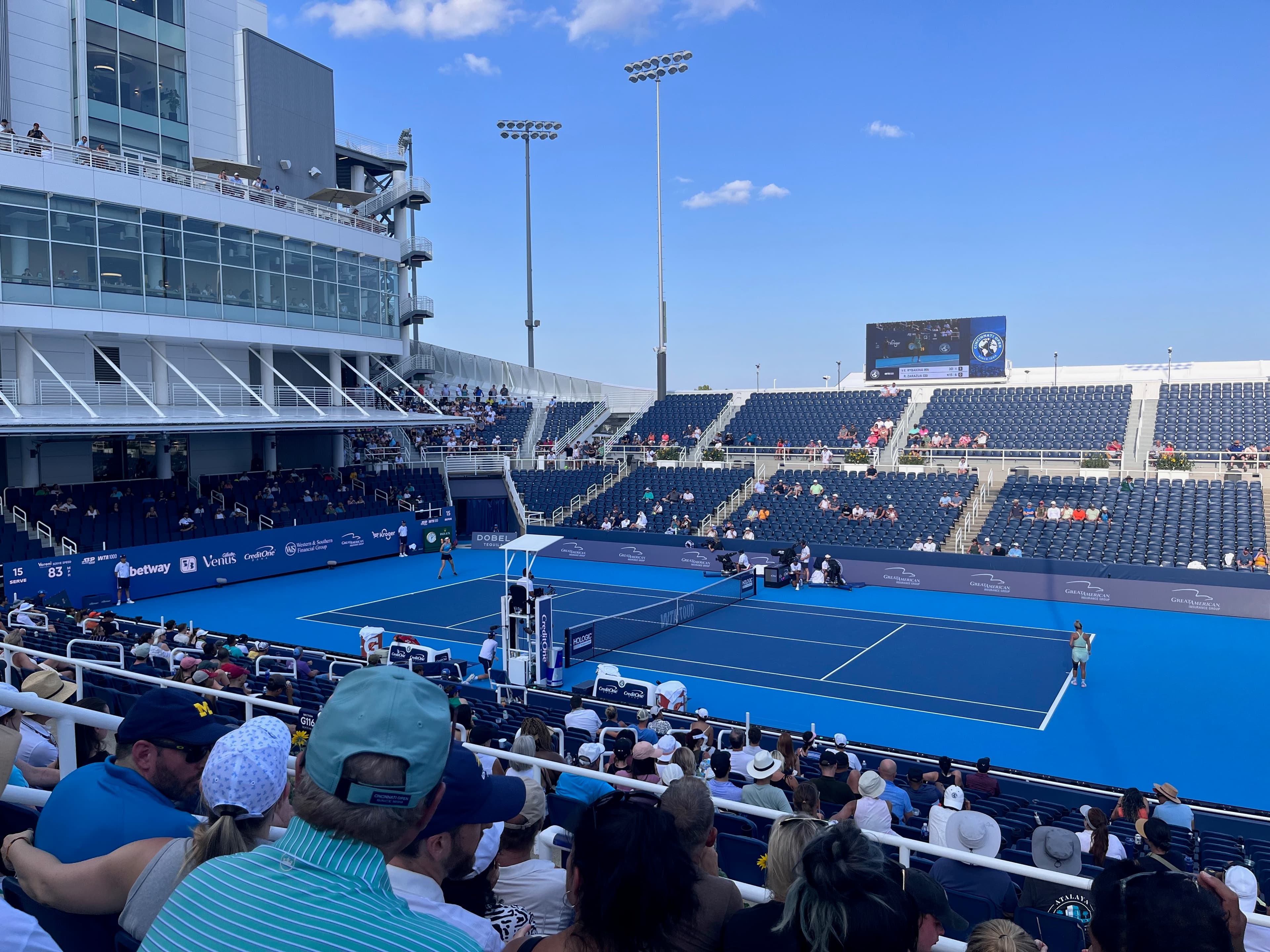
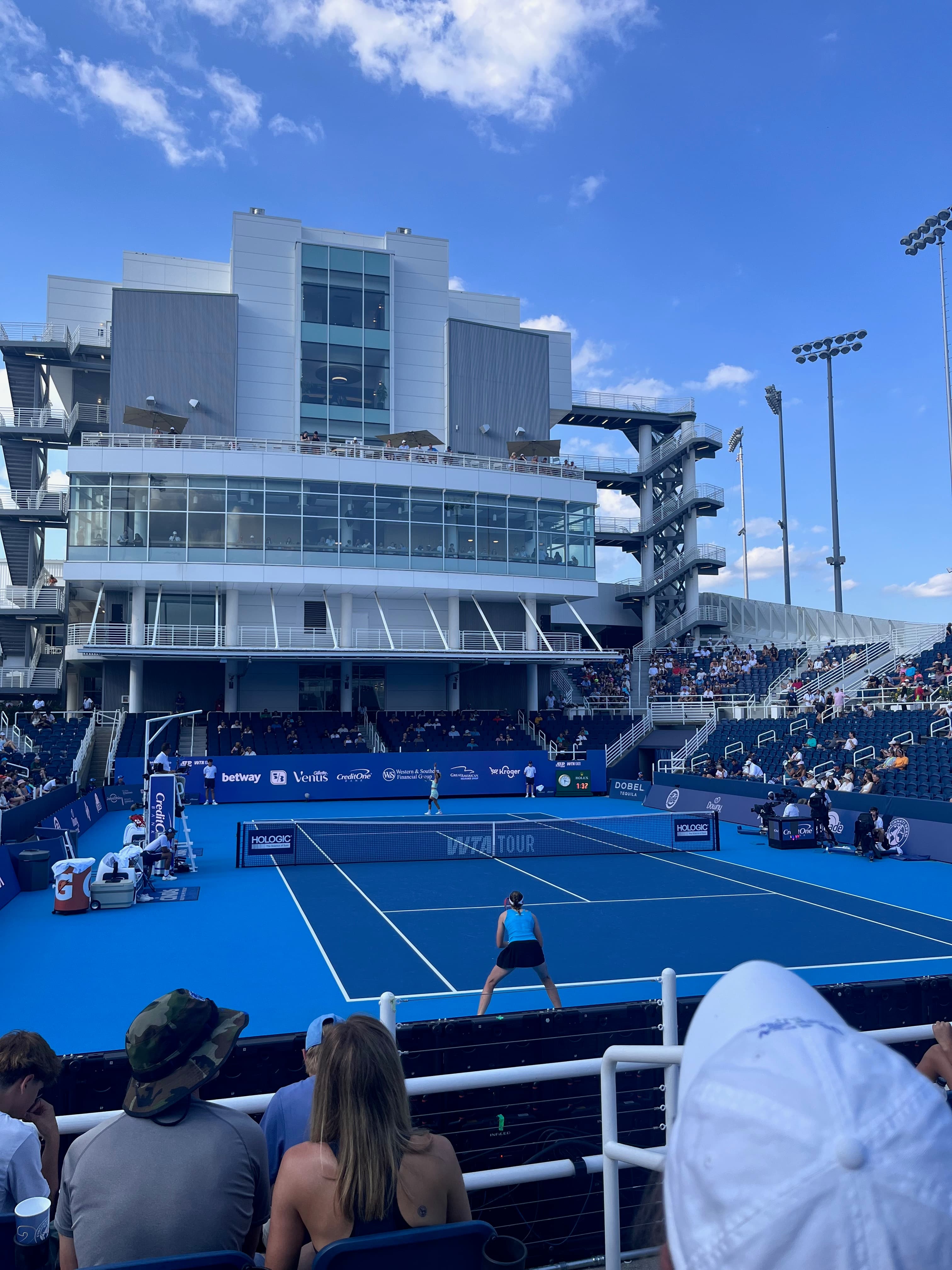
Our first match was Elena Rybakina.
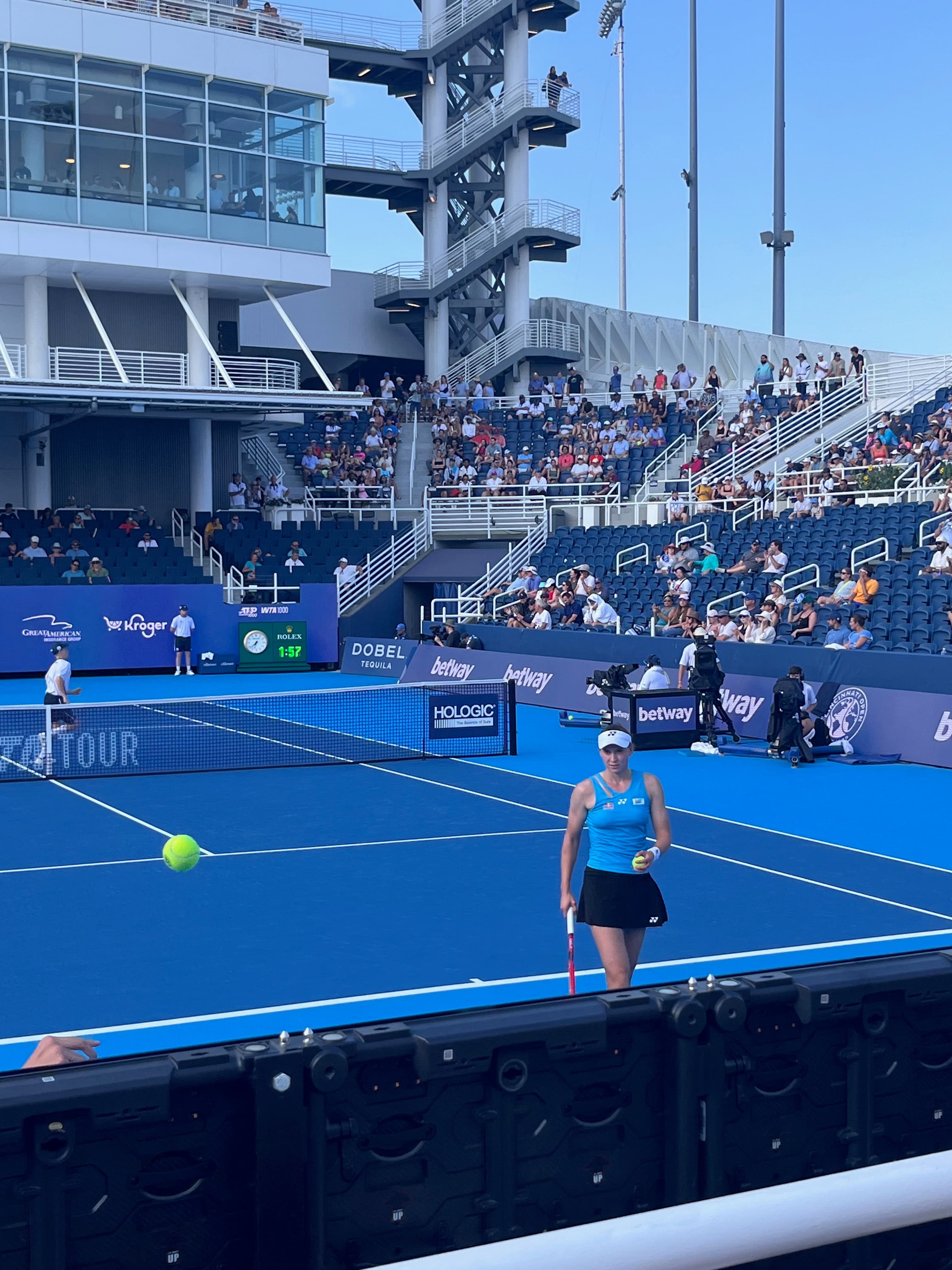
Looking back now, Rybakina’s form around that time was not exactly at its peak, but her presence on court was still incredibly distinctive. Watching her play in person, my biggest takeaway was: she plays extremely violent tennis in an extremely quiet way.
At 184 cm, she has a high contact point on her serve and groundstrokes. Her forehand and backhand are both fairly flat and aggressive. On TV, you may simply feel that the ball is fast, but watching it live is completely different. You can clearly feel the ball explode off the strings with a sharp “pop,” flying low, flat, and heavy through the court. The pressure is real.
Her on-court temperament is also very unique. She barely shows emotion, does not scream, does not celebrate dramatically, and simply sends the ball back with calm, elegance, and precision. Violent output, ice queen skin. I have to say, I am very much the target audience for this style.
There were also a lot of people cheering for Rybakina in the crowd. Clearly, people get it.
After watching Rybakina, we went to Center Court and watched two more singles matches.
The first one was Aryna Sabalenka.
Objectively speaking, Sabalenka is incredibly strong. Her game is very complete: powerful serve, heavy baseline shots, better movement than many people might expect, and once her forehand finds rhythm, she can apply constant pressure. She is not just hitting hard for the sake of it. There is a mature attacking system behind her game.
Subjectively speaking, though, I have never been the biggest fan of her style. Power, technique, and volume are all maxed out. Especially the volume. Sitting in the stands, I felt like I was getting a free hearing test along with the match.
I still prefer someone like Rybakina: quiet, understated, elegant, and casually hitting through you in one shot. Isn’t that nice?
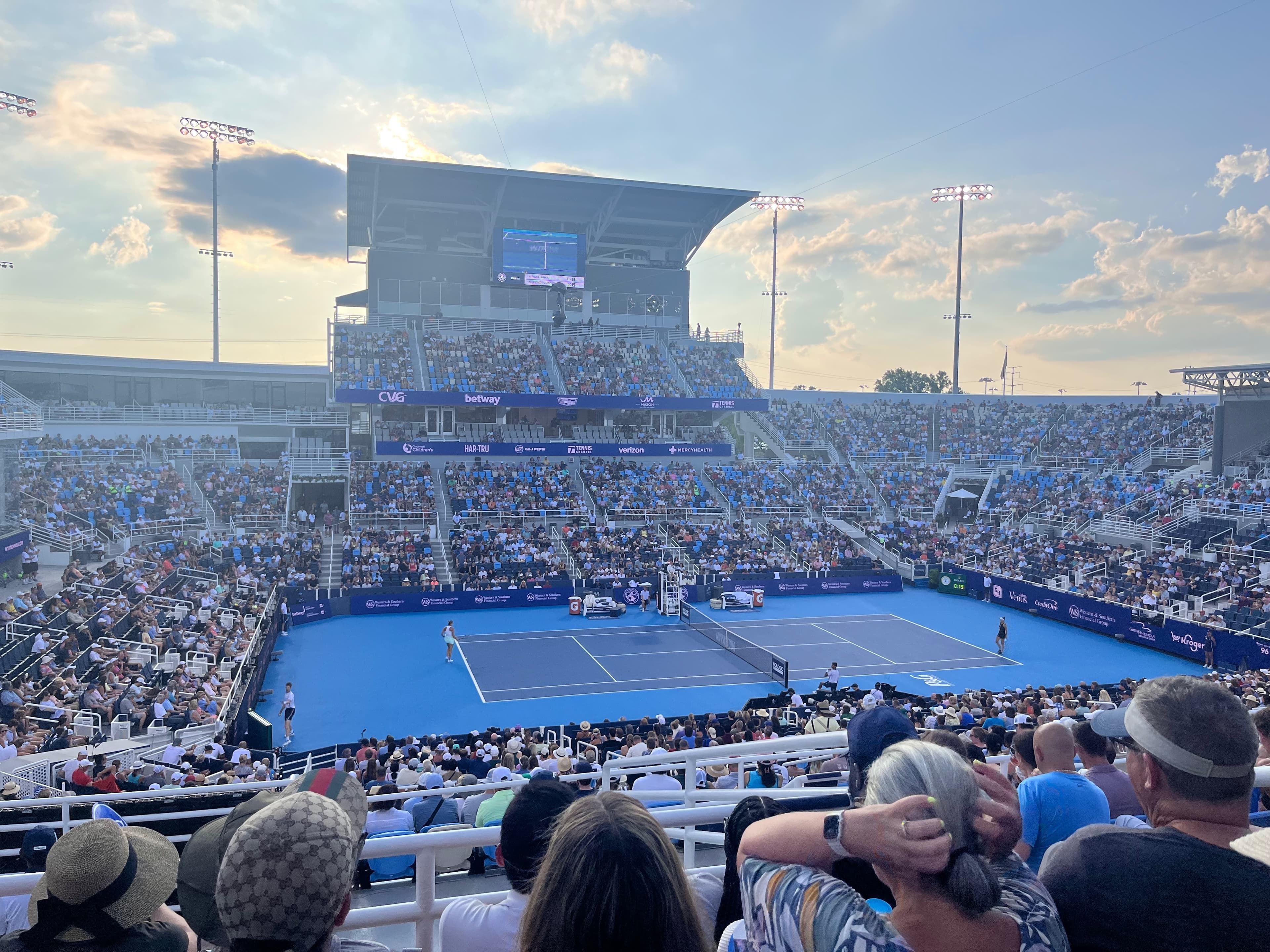
The next match was an all-American battle. Congrats to Fritz for the win.
All I can say is, after watching men’s tennis live, I had a brief moment of doubt: are men’s tennis and women’s tennis really the same sport?
The speed, spin, angles, and rhythm were all turned up to the maximum. It is not just that the men hit “faster.” Every rally ball carries so much topspin and penetration. After the ball lands, it jumps forward aggressively. The pace is so fast that by the time you fully register the direction of one shot, the next one has already been played.
TV broadcasts compress a lot of that live sensation. In person, the quality of the baseline exchanges, the serve-plus-one patterns, and the speed of attack-defense transitions were genuinely stunning. Pure enjoyment.
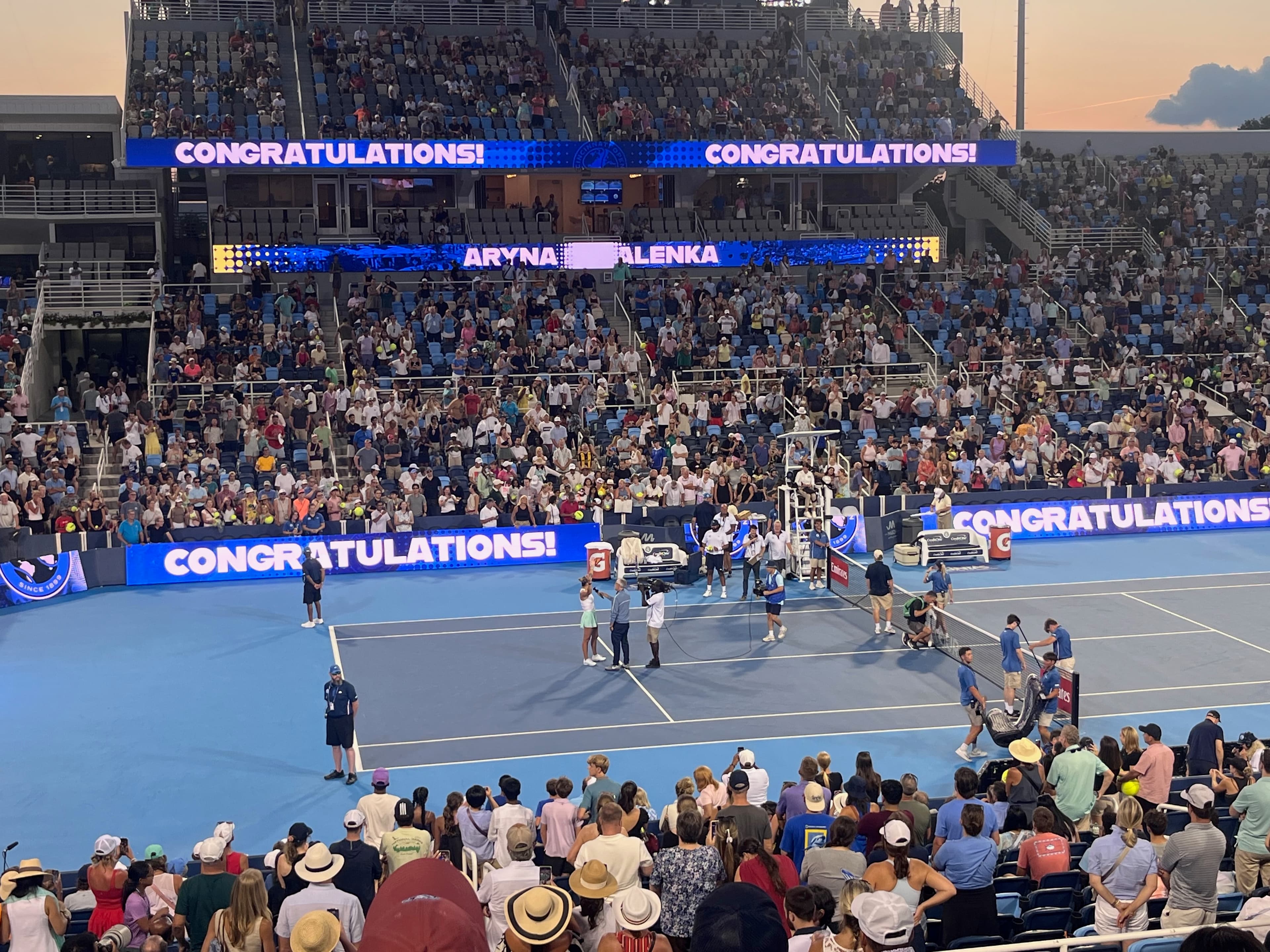
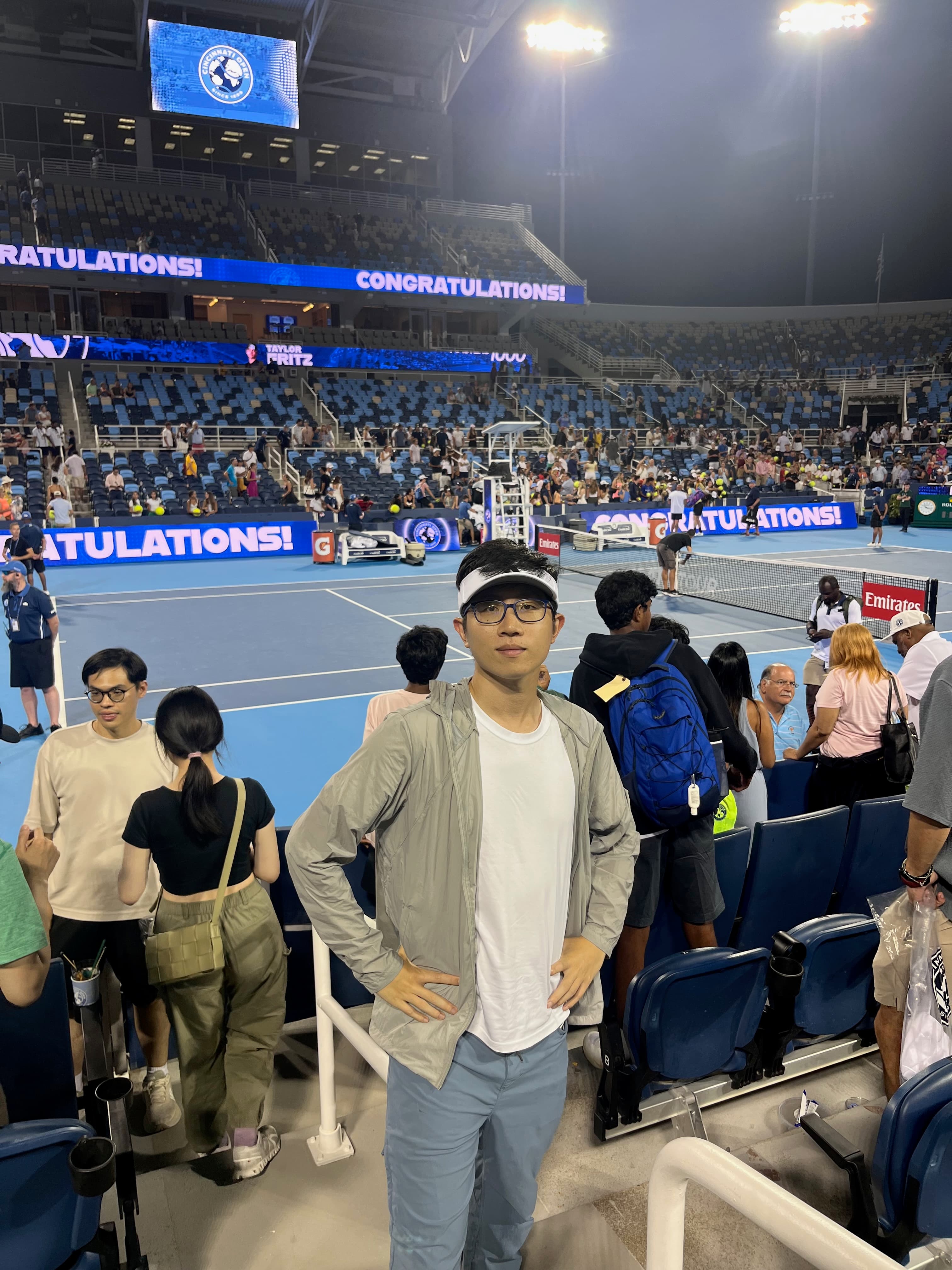
Then came the highlight.
On the second day, we had two missions: first, watch world No. 1 Jannik Sinner practice; second, watch Wang Xinyu play Coco Gauff.
Let’s start with Sinner’s practice.
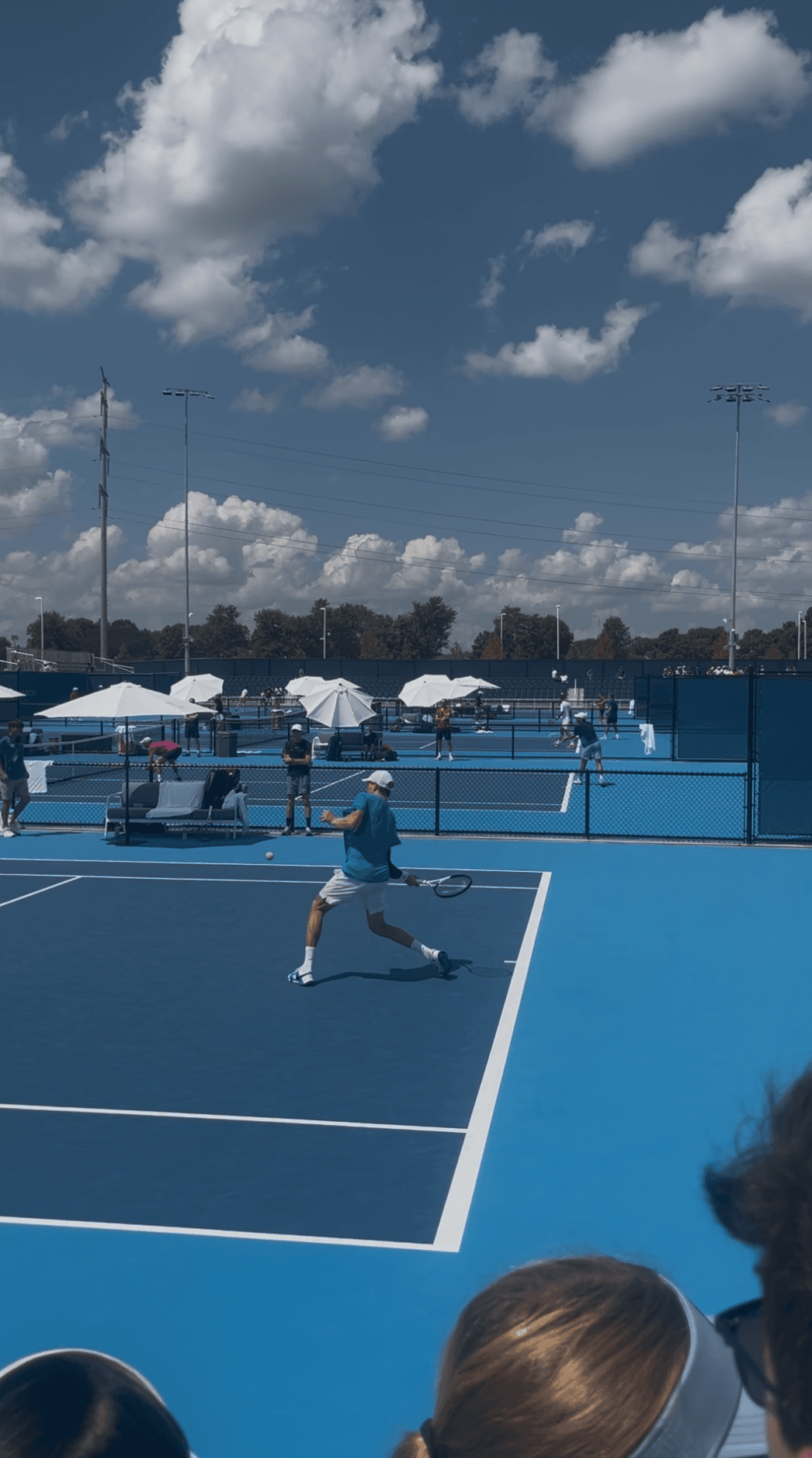
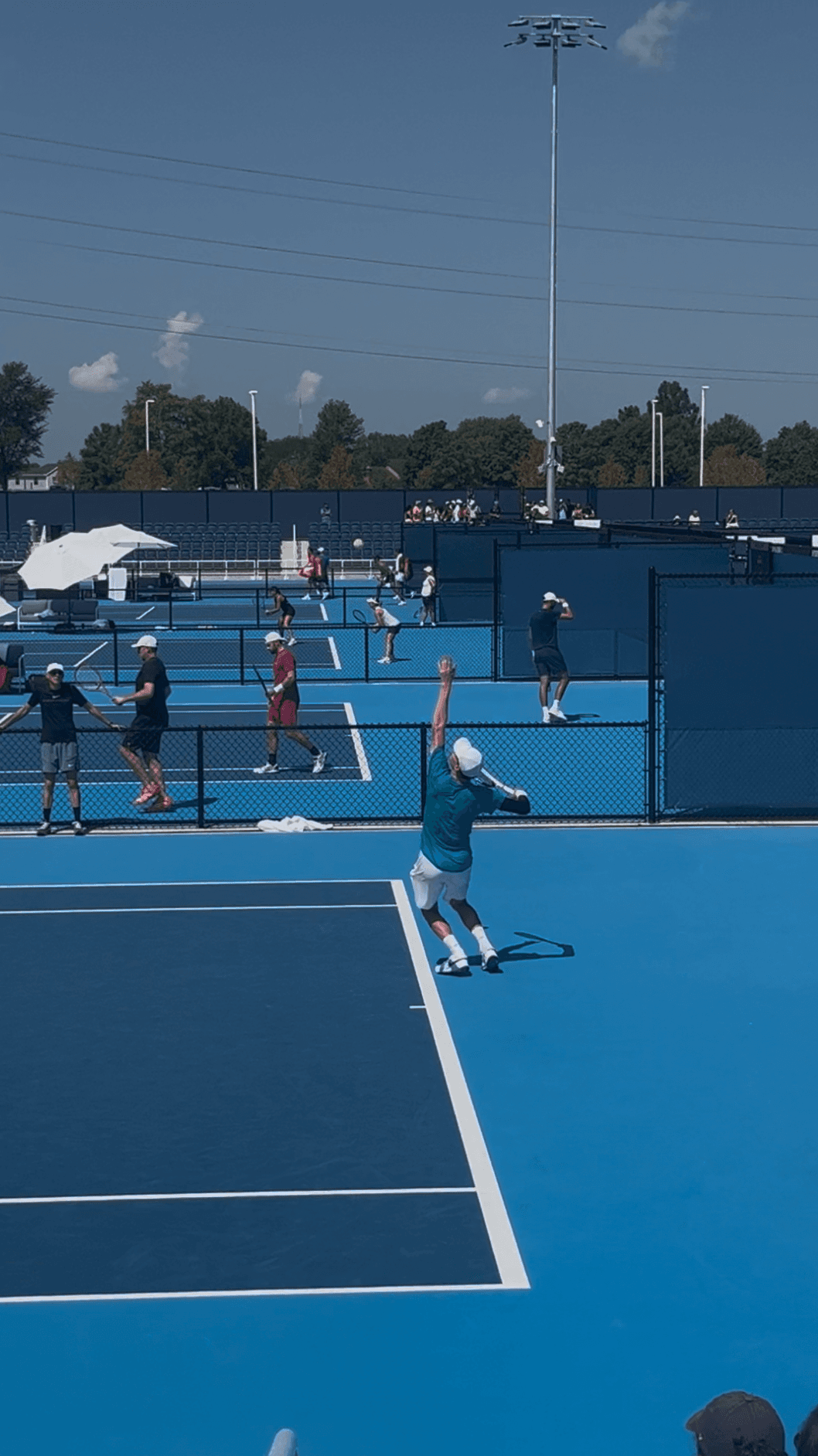
He practiced on a side court for more than an hour. Honestly, I had such a great time watching it that I even developed a very dangerous illusion: I felt like I could play like that too.
Of course, that illusion would probably last until about three minutes into my next warm-up.
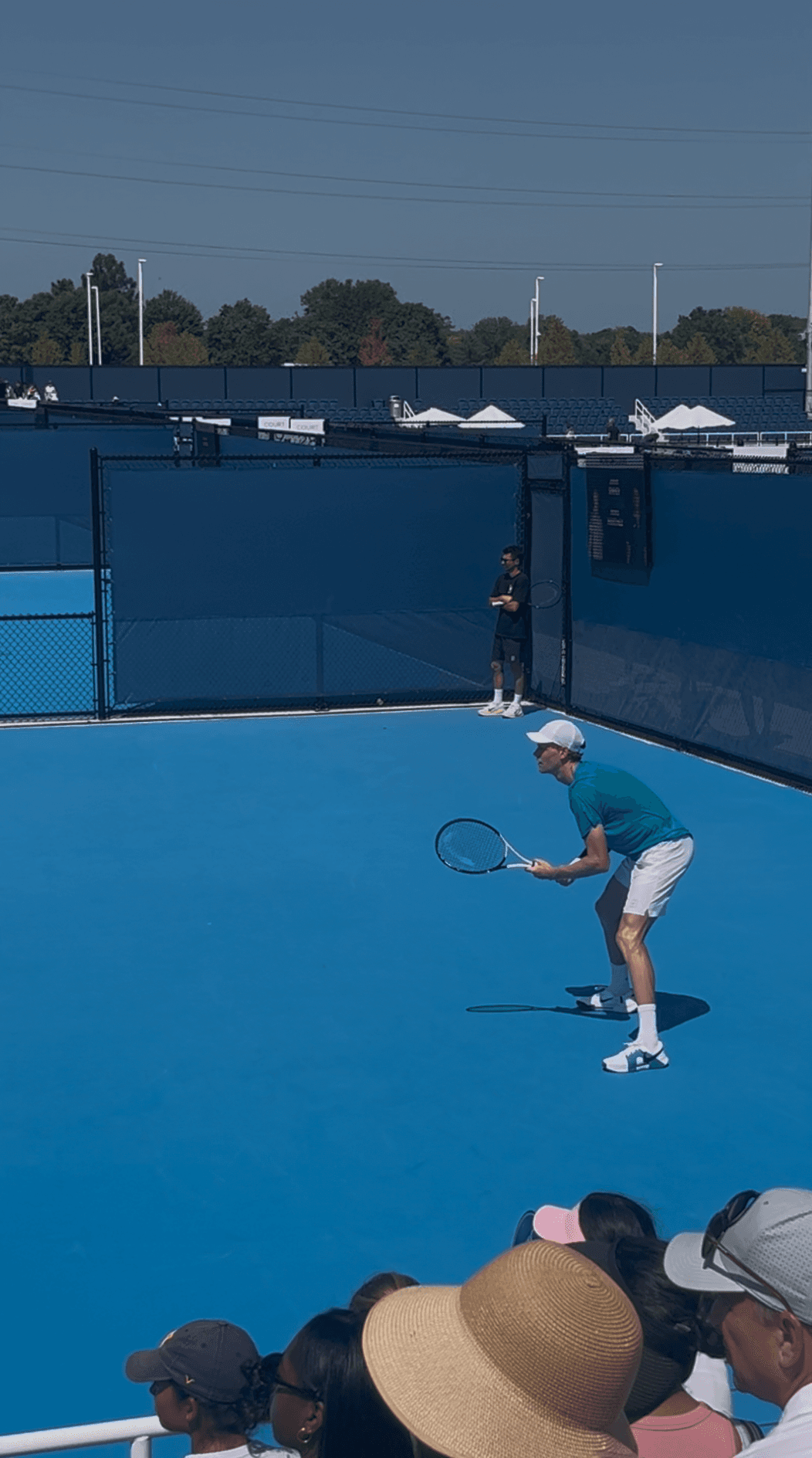
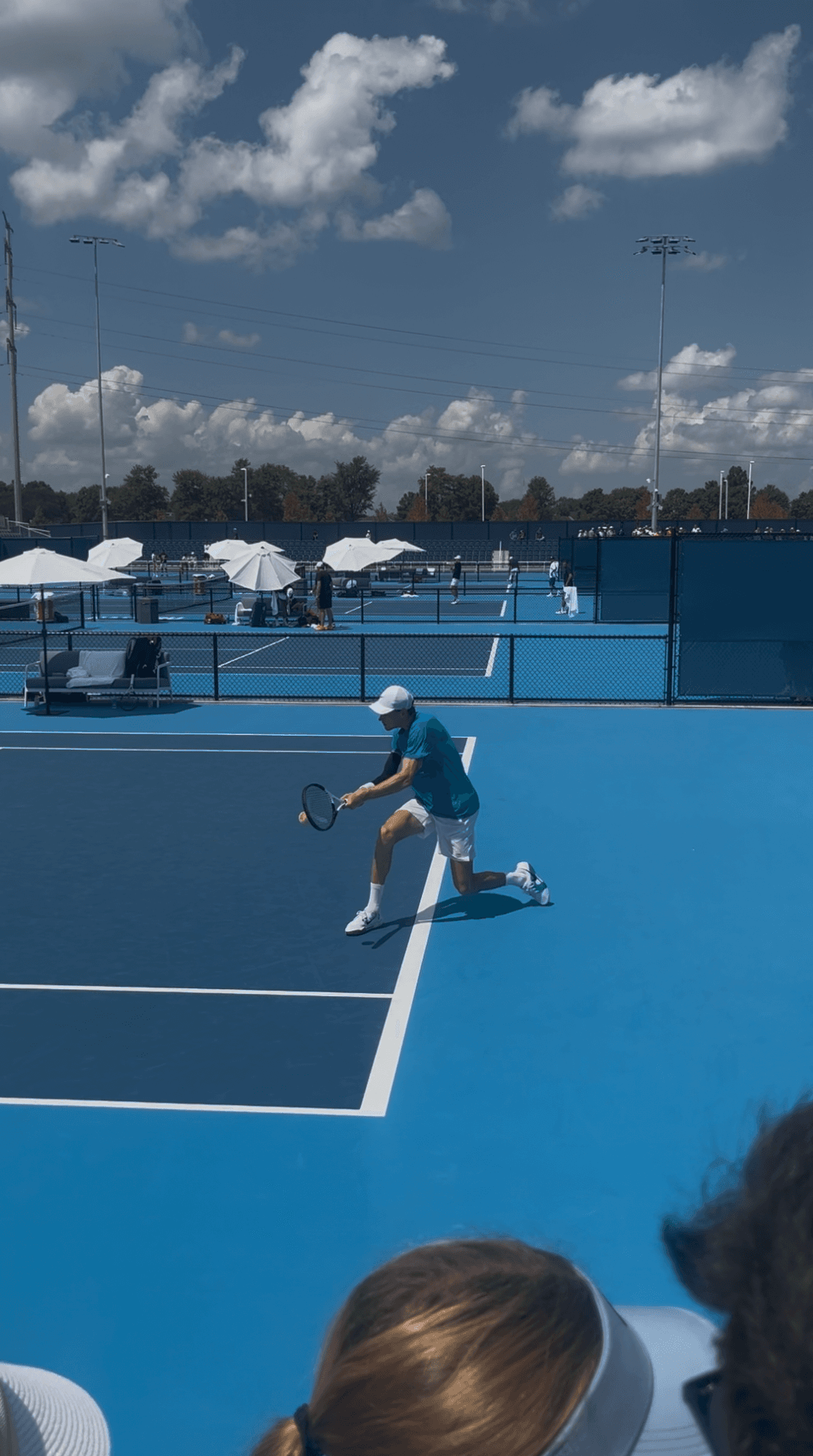
Watching Sinner practice in person, the most obvious thing was how complete his technique is.
First, both his forehand and backhand have an incredible whipping motion. His backhand in particular does not look overly dramatic, but the racquet-head acceleration is extremely clean. The contact point is stable, and the ball comes off fast and effortlessly.
Second, he uses his body exceptionally well. Hip rotation, lowering the center of gravity, weight transfer—everything is smooth and complete. He is not just swinging with his arm; he is truly hitting with his entire body. Before each shot, his footwork, hips, and upper body are almost always already in position, which gives him extremely precise control over spin, placement, and pace.
Third, he is very low-key. I admit I have a personal bias here: I like players who do not scream when they hit. During practice, Sinner was quiet, focused, and steady, like a calm but deadly red-haired tennis machine.
Fourth, after watching him for an hour, I maybe, possibly, approximately improved my own tennis by 0.5.
Fifth, tennis is such an accessible sport in a way. The world No. 1 was practicing just a few meters away, with around a hundred people quietly watching from the side. There was no huge barrier, no excessive packaging. You just stood there and watched how he prepared, moved, hit, adjusted, and found rhythm. That kind of close-up learning opportunity was amazing.
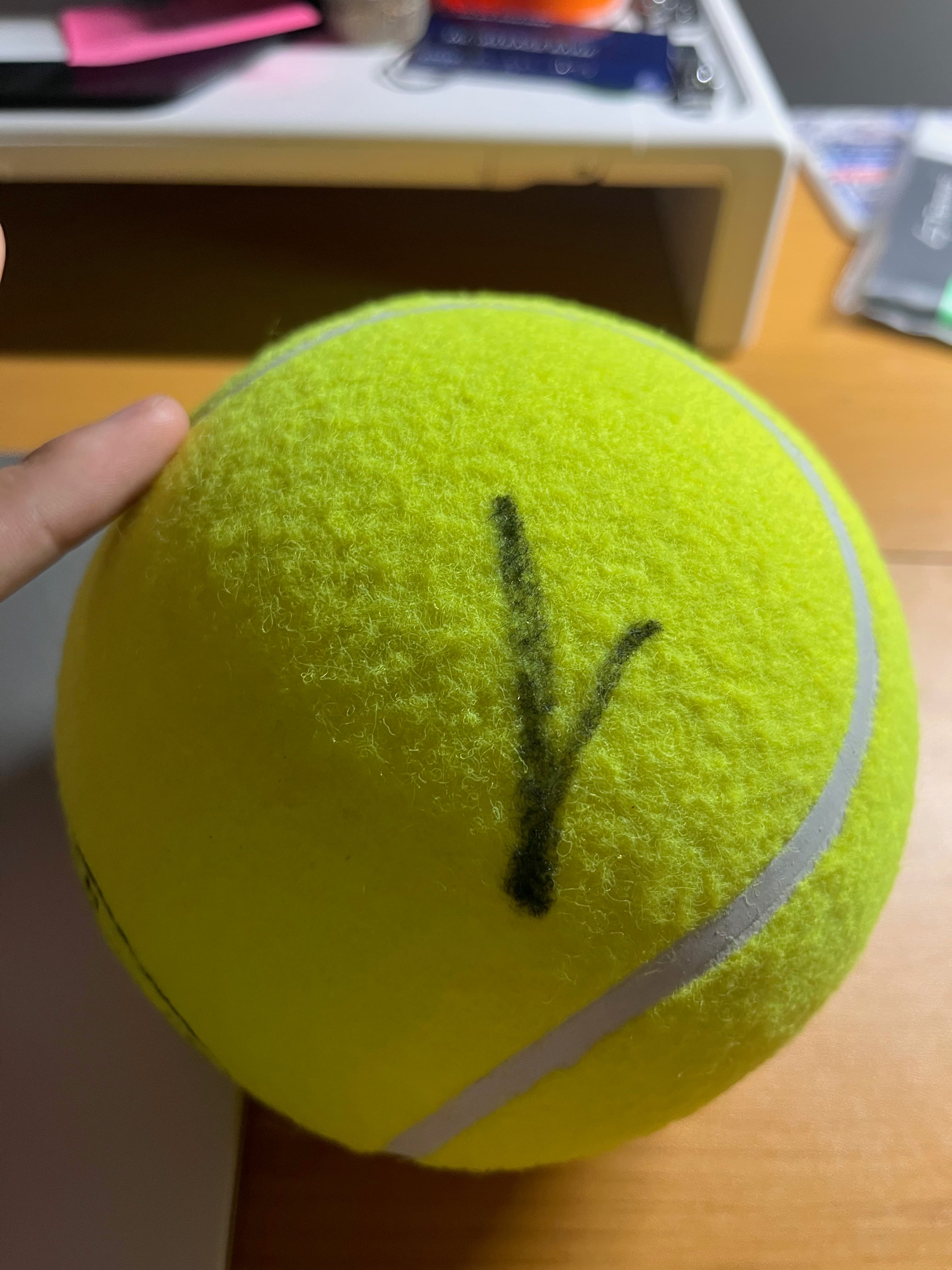
Sixth, I got a tennis ball signed by Sinner. I mean, that has to be worth 200 dollars, right? If not in market value, then definitely in emotional value.
The second highlight was Wang Xinyu against Coco Gauff.
I really tried my best for this one.
After all, Coco is American. When the whole stadium was chanting “Go Coco!”, a few Chinese fans and I were still stubbornly yelling, “Jiayou, Wang Xinyu!”
For a moment, it really felt like an away match.
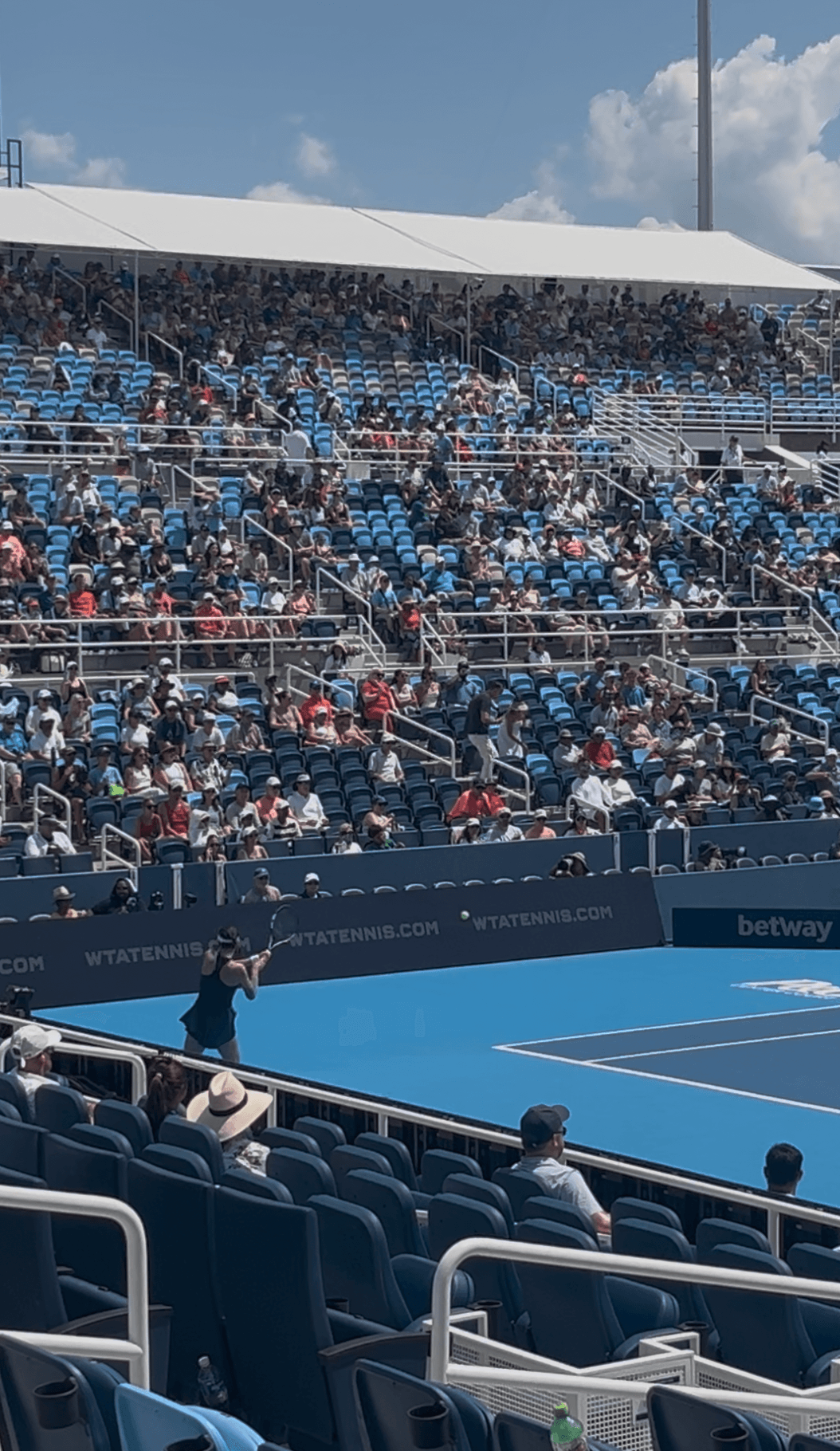
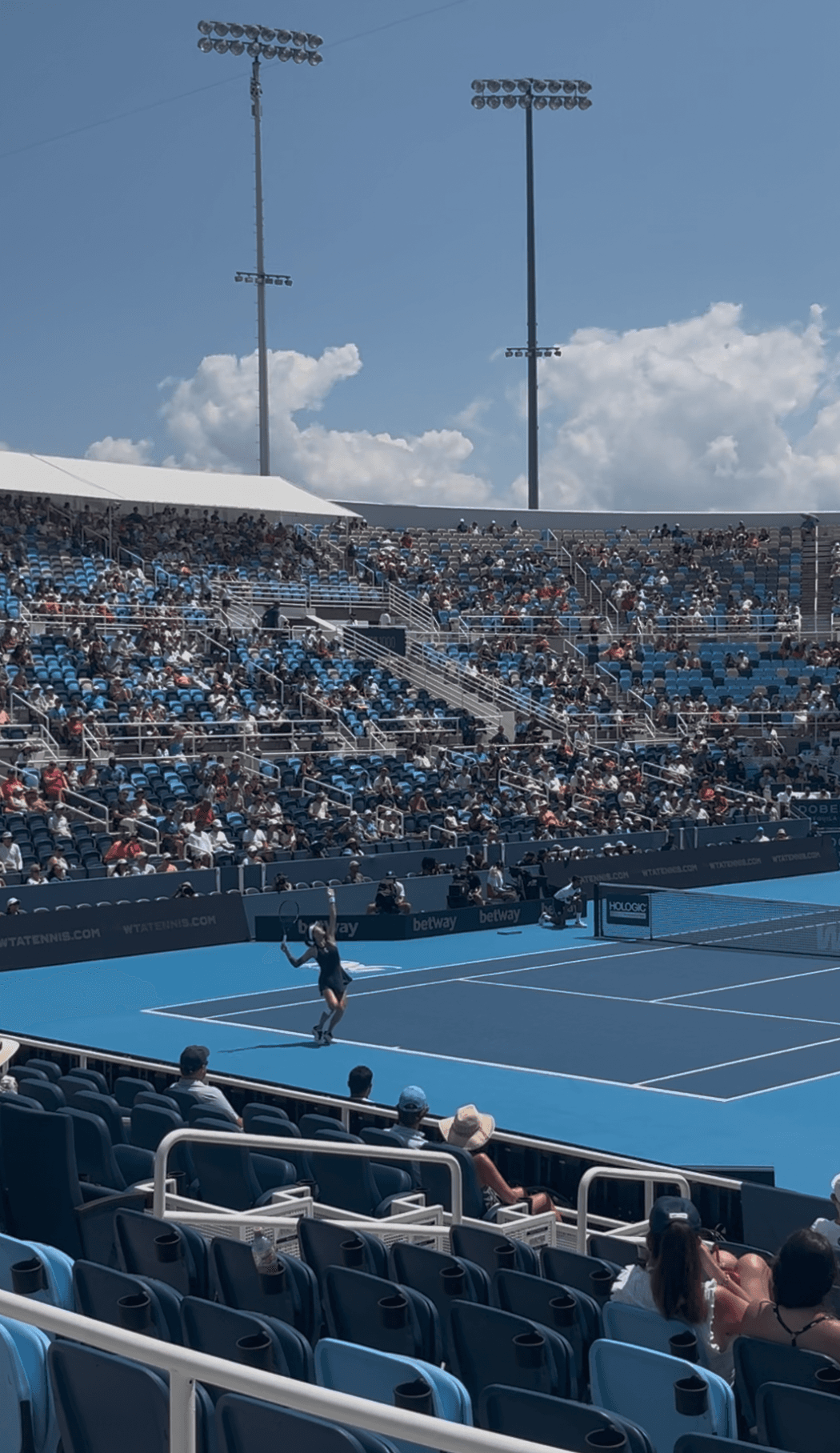
Unfortunately, Coco was just too good. Her court coverage, counterpunching ability, and transition from defense to offense were all extremely strong. Many times, you thought Wang had already gained the upper hand, but Coco would somehow use her movement and athleticism to dig the ball back, then immediately reset the point—or even turn the rally around.
Wang Xinyu had plenty of beautiful points too, but overall, Coco’s consistency and handling of key moments were simply more mature.
Still, let’s go, Xinyu. Being able to cheer for a Chinese player in person was already a special part of the trip.
That said, I do need to complain a little. I waited near the player tunnel for 20 minutes after Wang Xinyu’s match, hoping to take a photo with her. She still had not come out, so I left. Then my friend waited a bit longer and caught her when she came out at minute 22. They got the photo. I spiritually collapsed on the spot.
After the match, we headed home.
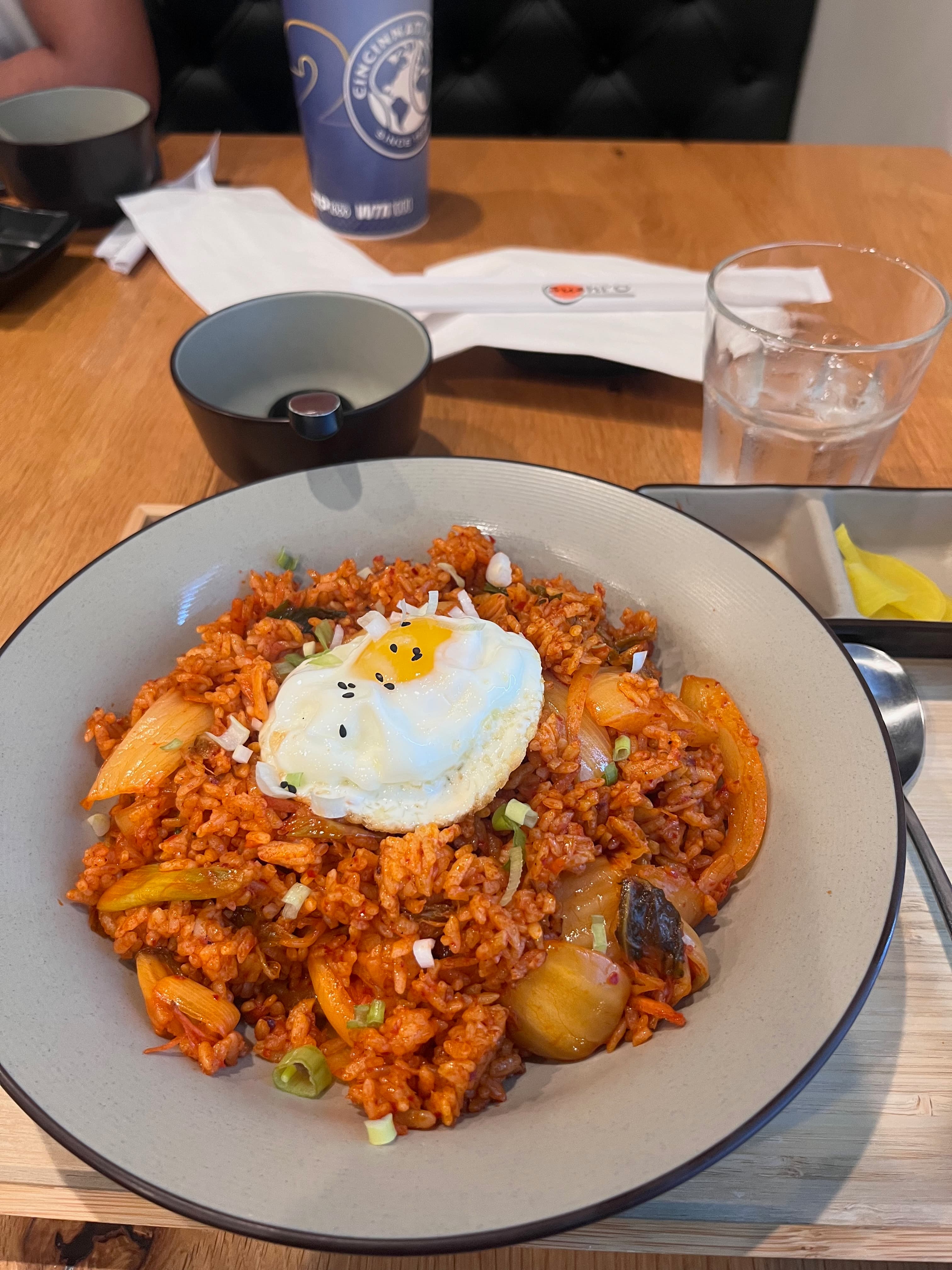
We had Korean food on the way back, then chatted and listened to podcasts during the drive. The matches themselves were amazing, of course. But looking back, the best part of this trip was not really about who won or lost. It was about experiencing high-level tennis up close and truly feeling the deeper charm of the sport.

My tennis skills may have improved by only 0.5, but my tennis addiction definitely went up by 100.
Login to leave a comment or like this post.